Tuesday, January 17, 2017

Refugee Is Not A Foreign Term

Source: JRS Int. 
 Refugee Is Not A Foreign Term
By Angeliqa Bridgett, MSOD

Before this academic global immersion (AGI) to Italy, the word “refugee” rarely crossed my lips and thoughts. Knowingly sheltered since a young age from some of the tragedies of the world and our history, I was comforted in thinking that some incidences would not apply to me if I lived a morale and Christ-like life. As I reflect on a time where the term refugee even became relevant to me, I remember when a well-respected comedian and political activist stated “I was watching the news and saw all these Black people wading the water of Hurricane Katrina, and the news kept referring to them as refugees. These weren’t refugees! These are American citizens!” Now, after just one week I see how loosely the misconception of what a refugee really is and where many people create a bubble for themselves. This could happen to me, or you, and any of us; and yes, we could be considered refugees or internally displaced people (IDP) depending on the situation.

On our first day in Italy, we were visited by Father Thomas Smolich with Jesuit Refugee Service. In his presentation he engaged the class by having us guess which countries were the biggest hosts of refugees. Only one person out of fifteen of us accurately knew only one of the biggest host countries. Turkey, Pakistan, Lebanon, Iran, and Ethiopia are doing their part in helping someone who is forced to flee his or her home. I do not think any of us were surprised that America did not make the list. According to the UNHCR 2015 documentation regarding global leaders and statistics on refugees, America is doing well in the new asylum-seekers category. However, with new government representation taking office how long will that even last? The fourth day of our AGI when guest speaker, Christopher Hein, came to talk with us about the geological versus legal and political issues of the refugee crisis is when my aha moment materialized.

Christopher Hein representing the Italian Council for Refugees (CIR) was very informative and knowledgeable about the rights of refugees and asylum seekers. Both Christopher and Father Thomas emphasized the need for letting immigrants work legally and the importance of integration. Their thoughts were confirmed on our last day with UNHCR representatives Andrea De Bonis and her colleagues when they echoed the same sentiment, but delivered it with a more direct messaging in that “we pray that another tragedy doesn’t happen soon because we would not be able to assist. There needs to be more opportunity for immigrants legally so that the resources are able to grow in a time of need.”

So, what can I do? Throughout my work history and experiences with people over the years, I am learning that we all connect on a human and emotional level, everything comes down to dollars and cents, and there will always be politics around decisions. My first step to understanding and helping with our worldwide refugee crisis can be to understand my U.S. government and what we are voting for and who we are electing into offices at the lowest levels. I can sign up to see our government take action with immigrant reform. I can educate myself and pay attention to issues outside of my bubble since we may never know what can make it burst. I will be more aware, spread the word, and not keep quiet.

Help Us, By Helping Them

Source: AP
Help Us, By Helping Them 
By Stephen Bandy, MNA

After the week in Rome I find myself thinking, what now? What does all this mean and where do I fit in? Of course, I can talk to others, share my experience, master my elevator story but that will never be enough. A refugee we spoke with in Rome, that we were put in contact with through Centro Astalli, explained that most refugees “want to go home” and that he “has one foot in Italy and the other in Kenya.” I know that we should do all that we can do to make everyone feel welcome in a country that is foreign to them, but we should also be focusing our efforts on making sure they never had to leave their home in the first place. This can only be done if countries proactively invest in the major countries that the refugees are coming from, and going to first. Rather than reactively investing in increased border protection and country specific social programs.

It might seem that it is too late for this type of investment, the crisis is here, and we can not live in the past, but that approach will only lead to the continual increase in the number of refugees each year. The UNHCR estimates that in 2008 there were 10.5 million refugees but that number has risen to 16.1 million by 2015. This shows that the current structure is not working and continuing down this path should not be an option. The investments should go directly to the countries that are producing the most refugees.

According to Jesuit Refugee Services, 53% of refugees come from Somalia, Afghanistan, and Syria making them the top three countries that investments should be focused. Of course, there are political issues in these three countries that cannot be overlooked, investing is much easier said than done. If no deal to increase infrastructure, education, and job opportunity can be reached in the original countries the investments should then be focused on the countries that are currently hosting the most refugees. These countries include Turkey, Pakistan, Lebanon, Iran, and Ethiopia. Again, political issues in the host countries exist as well, but with the correct emphasis being put on collaboration and relationship building I am sure that a deal can be made.

We live in a society that can be described as “us vs them” that believes the “us” is better off without “them." Unfortunately, I do not think that is mindset is going away any time soon, but to have a real impact on the refugee crisis this idea does not need to be changed, just the solution associated with it. If politicians shifted focus away from internal protection to external investment the increasing number of refugees will slow down and the relationship between the countries will improve. Although I personally believe we should all become more accepting it will be easier to persuade the people to assist others if they see a positive outcome for themselves. This external, proactive investment, will lead to a sustainable future in which all countries will benefit.

Monday, January 16, 2017

Slavery Yesterday and Today

Photo by 
Slavery Yesterday and Today

By Katrielle Vaslenio

The Colosseum, also known as the Coliseum, shown above, is one of the most iconic buildings in Rome. People from all over the world travel to Italy to see its impressive size and beautifully crafted Roman archways. The magnitude of this building is awe-inspiring. The Coliseum was on my own travel bucket list before this AGI-Rome trip.

However, on this AGI trip, I learned that this building has a darker history. Built in 70 AD at the commission of Emperor Vespasian, the Coliseum was a gift to the Roman people. His idea was to build a center place for the common and poor folk to enjoy in an attempt to keep his subjects happy. Styled as an amphitheater, the Coliseum could hold 50,000 seated spectators and 80,000 spectators standing. It is estimated that over 50,000 slaves built the Coliseum. These slaves came from areas all around the Adriatic Sea that were conquered by the Romans. On this trip, we took a tour of the Coliseum and learned about the slavery that built it. It’s an eerie feeling walking around such a grand structure, imagining the blood, sweat, and forced labor that went into its creation. As I walked with our tour guide, I tried to find a balance between my own wonder of the structure and my unsettledness of its history. To learn more about slavery during the Roman times, visit this website or – if you’re planning a visit to Rome – I highly suggest taking a walking tour of the Coliseum.

Although it’s been centuries since the Coliseum was built, the slavery still exists. Through this program, I learned how slavery intersects with our world’s current refugee crisis. Forced migration and the mass movement of peoples has resulted in human trafficking – essentially a form of modern-day slavery. As migrants move into and through Italy, the country has seen an increase in human trafficking. In the 2016, the U.S. Department of State released a report (found here) briefing the human trafficking in Italy. When we met with the Director of the UNHRC and his colleagues, (thank you, Stefan, Fabianna, and Mikal!), I learned that in 2015, they saw an 80% increase of human trafficking of Nigerian women. They shared that there is a huge difficulty in getting women to report human trafficking and it’s hard to prosecute without proof or reporting. According to the International Labour Organization estimates that about 2.5 million people have been trafficked at any one time and are subject to sexual or labor exploitation. Currently, Italy has taken several measures to help victims of trafficking, an important task as hundreds of thousands of immigrants cross into their borders, many with the opportunity to escape their situations and claiming asylum.

The world has changed drastically since Ancient Rome but slavery – in the form of human trafficking and forced labor – still exists. Human trafficking isn’t absent in the United States either. When I arrived back in the States, I saw the poster below, strategically placed when exiting the customs line at San Francisco International Airport.

If you are interested in learning more or getting involved in eradicating modern slavery, check out Polaris, an organization in the U.S. that is working to restore freedom and prevent more victims.

While work is being tirelessly being done around the globe to end human trafficking, we are nowhere near the end and our current refugee crisis has placed the issue at the front door of many host countries. The policies and actions we take next determine the future of these exploited peoples. Although our world has a deep history of slavery, our future doesn't have to.

Photo by Katrielle Veslenio 

Media and Refugees


Photo Credit: Daily Mail
The Power of Words and Images: The Role of Media in the Refugee Crisis

By Julie Brown

People around the world rely heavily on news from various sources, ranging from television to newspapers, Facebook to Twitter, to receive information about current events. How these various media outlets report on a topic can set the tone for the public’s response to it; bringing awareness and support to the topic or discrediting it, all in a matter of moments. The media’s approach to the refugee crisis in Europe clearly illustrates how words and images can influence public opinion.

During my first day of the AGI-Rome experience, I was quickly confronted with this reality. Despite my thoughts that I was an “informed person” about the crisis, I soon realized that the information I had consumed yielded few facts about the real issues at hand and were based on the sensationalism or “if it bleeds it leads” approach to journalism. I was yet another countless victim to how the media was reporting on the crisis and I didn’t even realize it. As I explored how the media was reporting on the crisis, I quickly learned that I wasn’t alone. Others were also looking at how the media’s reporting of the crisis was being handled. The Huffington Post called into question the media’s reporting of the crisis back in October 2015 in its article “How the Media Are Reporting on Europe’s Refugee Crisis” and how journalists are called to be objective and to provide context for their readers. As The Huffington Post article identified, some were doing well while others not so well. The goal for all journalists is to remind the public that the problem still isn’t solved, but not sensationalize it.

Exploring this topic further, I quickly found a stark example of the power of words and images in the headlines of the Daily Mail, a newspaper in the United Kingdom’s (U.K.). On Friday, August 28, 2015, the Daily Mail’s headline read, in all capital letters, "As numbers break all records… Migrants: How Many More Can We Take?" This article focused on the staggering statistics of migrants flooding into Europe and the U.K. and the stress they were placing on the various systems. A few days later, the Daily Mail’s tone drastically shifted. On Thursday, September 3, 2015, the Daily Mail’s front page read, “The victim of a human catastrophe” and was accompanied by a full-page photograph of a Turkish policeman carrying the lifeless body of a child. These two vastly different titles and images not only illustrated the power the media has to evoke emotions, but also highlighted the complexity of the refugee crisis and how the media attempts to keep it relevant without fatiguing the public. 

Headlines and images are just one way to evoke emotion. Another is the words and terminology used to describe the crisis and those affected by it. During the AGI-Rome experience, each organization that I visited was clear in explaining how they serviced people based on their classification status of refugee or migrant. Throughout my reading of the news, the distinction between refugees and migrants isn’t clear and the terms are often used interchangeably or incorrectly. These two terms are vastly different according to a United Nations High Commissioner for Refugees (UNHCR) article published in July 2016 (UNHCR.org, July 2016). According to the article, the UNHCR defines refugees as people fleeing conflict or persecution and are protected by international law; therefore they may not be expelled or forced to return to their homeland if their life and freedom is at risk. In contrast, a migrant chooses to move to improve their lives by finding work, pursuing education or uniting with other family members. Also, a migrant is able to choose to return home and is protected by their government. These two terms are vastly different. By using these different terms, correctly or incorrectly, the media plays a significant role in determining whether or not the public or government officials are willing to provide support or financial aid (MakeSense.org, 2015).

Finally, after meeting with the various organizations throughout the AGI experience, I realized that hearing the personal stories of refugees shifted how I viewed the crisis. I looked into various news articles and realized that many of the articles did not focus on individual stories or bring a human perspective to the crisis and the plight of the refugee; rather the stories focused on the economic impact to a country. Articles trying to dispel the theory that refugees were making a negative impact on the economies, fell into this trap too of using numbers rather then personal stories. In January 2016, The Economist attempted to dispel the notion that the refugees were hurting the European economies in its article, “The Economic Impact of Refugees: For Good or Ill.” Unfortunately, people often get overwhelmed with large numbers and can’t truly understand millions; however, they can understand smaller numbers such as a family unit of five. If The Economist had utilized the example of a family, not only would it have put the expenses associated with the family in perspective, it would have made it more relatable to the average person. By making the refugees relatable, it’s an attempt at minimizing the fears often associated with the refugees.

With refugees continuing to head to Europe and other countries with no foreseeable end in sight or solution to the crisis, the media will continue to play a critical role in how the people and the governments perceive and respond to the crisis. Being in the United States doesn’t make us immune to these media issues either. The aforementioned examples are extreme illustrations about how the media is able to use words and images to evoke specific emotions and responses from the public and governments. The point of this blog post is not to say that the news should be sugar coated; rather that the news should be cautious about how they cover the entire story, how they refer to the various people involved, etc. It also serves as a reminder to myself and others that it’s extremely important to research issues on my own, drawing from multiple sources to get a better understanding of the entire issue and to help put the issue into context. It also is a reminder to make sure when discussing an issue to be mindful and careful about using correct and appropriate terminology and language, not just catchy terms or sensationalism.

A Personal Refugee Journey


Yesterday's Refugee Epidemic, Today's Humanitarian Crisis Pandemic 

By Meno Crompton

I had to make a decision: to study humanitarian crises management in Rome or business analytics in Dubai?  I chose Rome for my visceral connection to the subject matter. The image that sparked my internal call to action was the 2015 image of 3-year-old Syrian boy, Aylan Kurdi, who drowned off the coast of Turkey. https://www.nytimes.com/2015/09/04/world/europe/syria-boy-drowning.html?_r=0 According to the UNHCR https://www.unhcr.it/, fleeing war and corruption in their homeland, over 3,000 people drowned in the Mediterranean Sea in 2016. This resonance connected to my own family’s journey when we fled war-torn Vietnam in 1981. To this day, I marvel at the rare stroke of luck my family was afforded. The UNHCR estimated that between 200,000 and 400,000 boat people died at sea. Other estimates compiled are that 10% to 70% of the one to two million Vietnamese boat people died in transit.

My mother was barely 26-years-old when she and my father, who was 31-years-old, fled communist Vietnam, with four children in tow. Their first escape attempt resulted in the Vietnam coast guard stopping them and confiscating the boat my father built. Typical of war-torn countries in desperation, the guards absconded with the money my father and his many desperate friends worked hard for and gathered over the years. Finally, by the second attempt, in 1981, we managed to barely escape off the coast of roiling South China Sea. Over the course of the next two years, we transferred through the sponsorship program to various refugee camps in Malaysia and the Philippines.

Growing up, I never really appreciated just how much my parents sacrificed in order to provide a better life for me and my siblings. Typical of a young child.  But now, as an adult with children of my own, that perspective has changed.  In many ways, one major inflection point was the week-long intensive course in Humanitarian Emergency Management in Rome.  It provided a lens that mirrored what it must have been like for my family and the millions who continue to struggle in similar circumstances of being forced to flee and to leave behind everything they know and have worked hard for. Much like my own parents, many of modern day migrants and refugees are young, smart, and would have preferred to remain rooted in their homeland.

What was intended at the outset for me to be a global discovery of refugeeism and how various organizations in Rome manage the recent refugee pandemic, in actuality burgeoned into an unexpected, self-reflective journey of my own family.  What the migrants and refugees today are faced with are prolonged, precarious circumstances for a dubious path to better opportunities in foreign countries. Much like the firsthand migration stories that I heard during the Rome AGI, my family, too, struggled to provide the bare necessities during our formative days in the U.S.  Naturally, I often catch myself trying to live through the eyes of my father and mother: what they saw, heard, the fear of danger and uncertainty that must have rocked them to their core, and the brave facade they needed to uphold for their young children. 

The most poignant moment during the entire week was a moment I shared with the Italian Refugee for Council director Christopher Hein. In my family’s photo album at home are a series of what looked to be old identification cards. I never thought much of them as a child. Never before had I paid attention to the “UNHCR” labeled at the top of my parent’s photos.

Having just studied more indepthly through the program the history and role of the UNHCR, it dawned on me that these are the very cards that gave my parents their identity when bouncing from one refugee camp to the next. Somehow, this relic of my personal story connected me more than ever to modern day refugees and the necessary process for migrants. Mr. Hein was a former UNHCR director who has dedicated his life to humanitarian efforts, so sharing these artifacts with him was special moment beyond comprehension.

Furthermore, director Stefan of the UNHCR in Italy stated that the refugee problem (over 1.2 million) in Europe pale in comparison to other South American countries like Colombia who’s struggling to manage their three million displaced persons. This sobering fact frames the reality that we are dealing with a global pandemic. What I did not appreciate before and now do is that the displaced persons and forced migrants problem is no longer a local problem. This is happening across the globe in nearly every continent.

Before embarking on the Rome AGI, I often felt paralyzed by the seeming inability to make a difference. What I now realize is that making a difference does not require some grandiose feat. Sometimes the most impactful action can be to share our stories and raise awareness, just as Anthony from Centro Astalli is doing. (Anthony arrived in Rome three years ago, after he, his mother, and sister fled persecution in Kenya.)
While we may not see the immediate impact of our conversations, we will never know where those connections will spark inspiration that will lead to further action. The planting of the seed began with me as a refugee in my early childhood. That seed since sprouted to a greater understanding and growing compassion toward the modern day refugee pandemic.  When I return back to the U.S. I will continue to nurture my burgeoning inspiration and to share the stories and the wealth of information I have acquired during my life-changing week at the Rome AGI.

Professor Tavanti provided a rare opportunity for me and my classmates to understand the global, humanitarian issue through the eyes of various NGOs in Italy. I am so grateful that I was given an opportunity to walk through that door.  I have no doubt that the Rome AGI is just the beginning to creating more impactful change.  Lastly, I find myself vacillating between frustration and hopefulness with the magnitude of the global humanitarian crises.  And I am not sure that I will see much improvement during my lifetime.  Because of my own life as a refugee-immigrant, as well as what I witnessed during the Rome AGI, I am more certain than ever that the power of the human spirit is unrivaled by anything less than faith.  

Have Mercy


Source: EPA
Have Mercy

by Jane Tobin

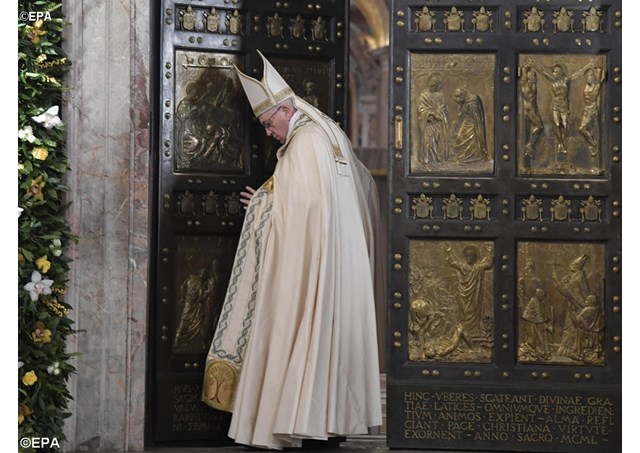
On November 16, 2016, Pope Francis celebrated mass at St Peter’s Square closing the door on the Extraordinary Jubilee Year of Mercy. To be honest, I had to dig around a bit to understand the context and significance of this event and this picture. First, Jubilee- what is its meaning of this event to the Catholic Church? According to the Vatican website, a Jubilee is quite simply, a Holy Year. Officially, it’s:
“a year of forgiveness of sins and also the punishment due to sin, it is a year of reconciliation between adversaries, of conversion and receiving the Sacrament of Reconciliation, and consequently of solidarity, hope, justice, commitment to serving God with joy and in peace with our brothers and sisters.”
But what was it about this Jubilee that made it extraordinary? Jubilees are usually proclaimed every 25 years. Pope Francis declared it on March 16, 2015, out of sequence, with a global appeal so that “the Church can draw attention to its mission as a witness of Mercy.” That’s a bold move and a telling example of Pope Francis’ leadership style. Through this Jubilee event, we observe what Chris Lowney outlined in Pope Francis: Why He Leads the Way He Leads. Lowney argues Pope Francis leads according to his values. It is not an act. It is his life, his way of living. Love and heroic ambitions are the underlying motivators of the Extraordinary Jubilee Year of Mercy.

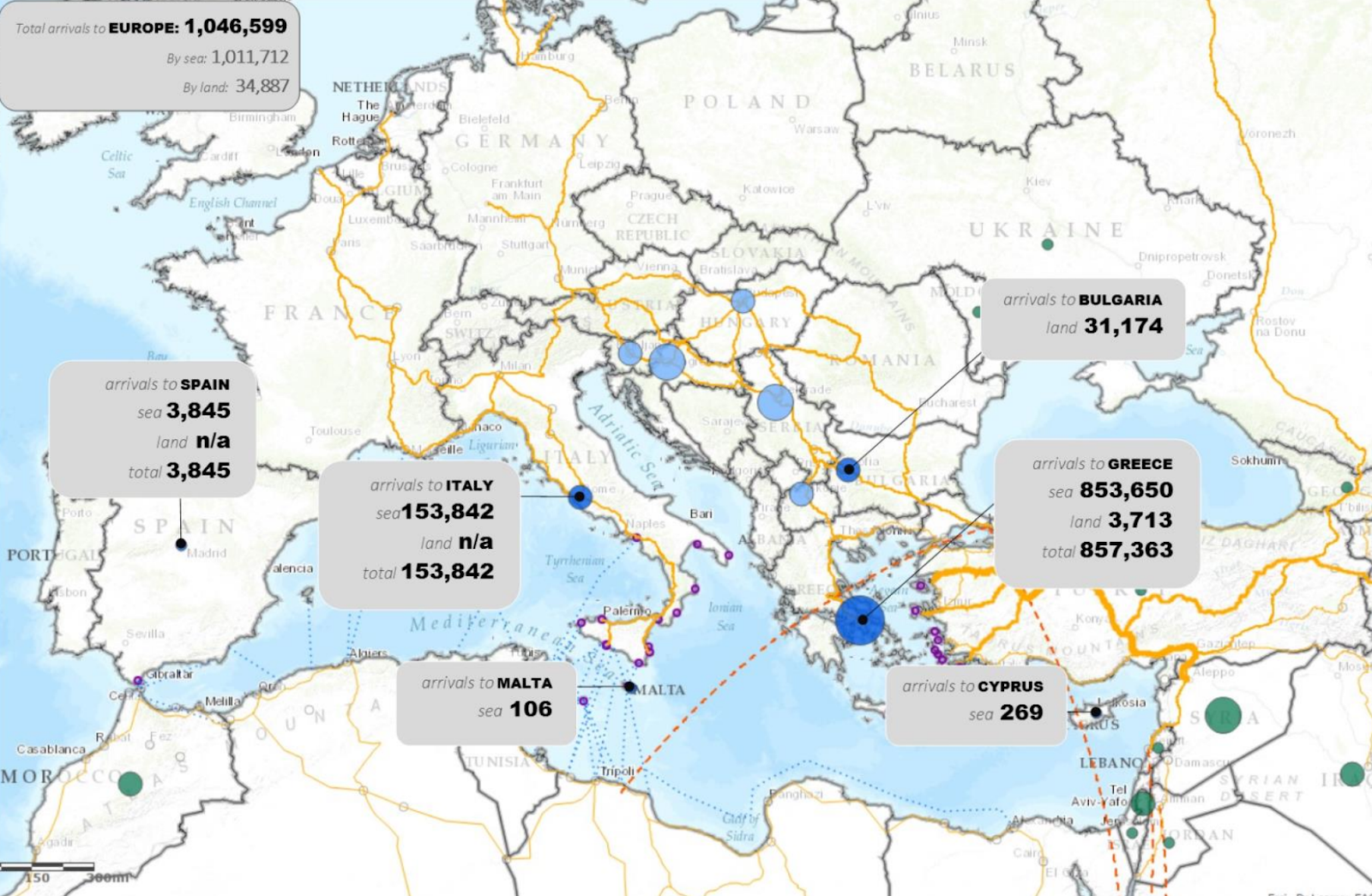
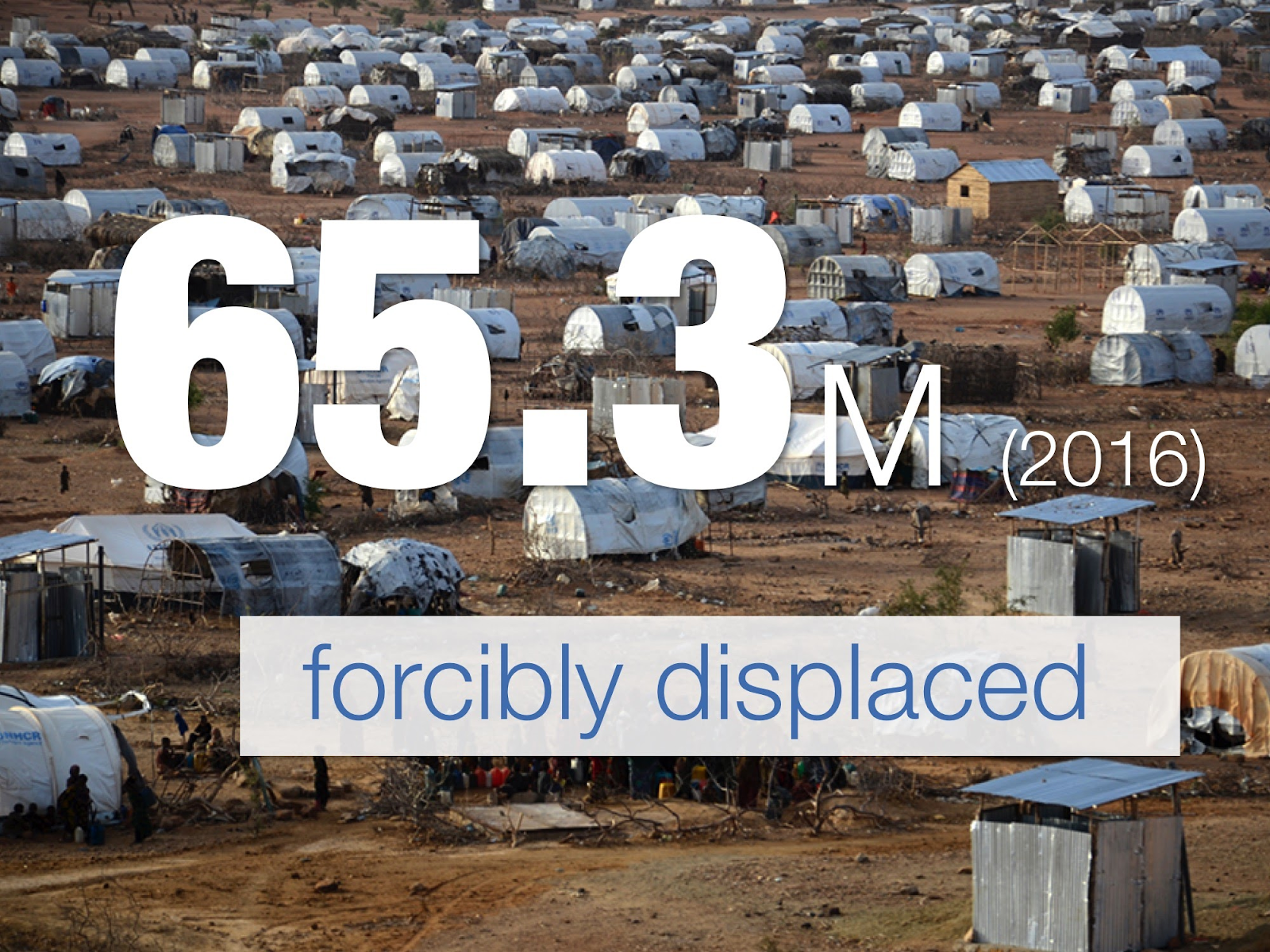
Certainly, 2015 was extraordinary. Italy along with Greece was overwhelmed with incoming migrants, forcing Europe to respond with policy and services to meet the demand. According to UNHCR 2015 statistics, there are 65.3 million forcibly displaced people worldwide, 21.3 million refugees, and 10 million stateless people. One only needs to glance at the 2015 illustration from International Organization for Migrants (IOM) to understand the magnitude of the crisis.

Source: IOM


2016, IOM report states Greece and Italy alone account for 92.9% of the 366,350 arrivals in 2016 (as of 16 November 2016). With these statistics, it’s no surprise Pope Francis turned the spotlight on the crisis challenging the world to respond responsibly with love, compassion, and mercy.

Over the course of our week as part of the AGI-Rome Program, we met many of these responding organizations that demonstrate mercy in all their work including identifying, educating, advocating and serving those whose lives and fundamental human rights are at risk. It’s easy to lose sight of hope these days. Daily news headlines seem utterly devoid of it. Merciful work never makes the front page, though it should. Through the AGI-Rome Program, we met some of the key players instrumental in responding and managing this humanitarian crisis. The heroic ambitions of the UNHCR and NGO’s such as Jesuit Refugee Service, Caritas, Centro Astilla and Programma Integra restore hope. Their doors are open; supporting, protecting and welcoming migrants with food, housing, language training and community. These organizations exemplify hospitality as they work to ensure each is known as a person deserving of respect and dignity. At the Celebration of Migrant Day, hosted by Centro Astilla and led by Father Arturo Sosa, SJ, we heard the stories of four refugees forced to flee their countries as young children. Mirvat, a refugee from Syria, is studying language and literature at a university in Rome. She like, many others is finding motivation to “make friends, and create a sense of family and home, noting that every refugee is building what was lost and broken.

Who are we to not see that but for a twist of fortune, this is not our story? Let’s let these stories lead and keep the door open to mercy.

Refugee as Identity Crisis

A young Syrian refugee giving testimony for World Day of Migrants and Refugees, January 13, 2017
A Crisis of Identity: On Politics and Perception

By Shakti Flesher

Having spent the last week in Rome immersed in the local, national, and European context of forced migration and refugee reception has given me a much clearer picture of the challenges facing forced migrants and service providers.

One of the key themes that emerged throughout this past week is that the European “refugee crisis” is in fact not a crisis of refugee influx but rather a European crisis of identity and management.

Contrary to what we hear about most often in the news, Europe is not the primary destination of refugees. In fact, 86% of forcibly displaced people are hosted by developing countries. Turkey, Pakistan, and Lebanon are the top 3 host countries for refugees. While the number of people arriving in Europe in 2015 was less than 0.5% of the EU’s entire population, 25% of Jordan’s population is refugees. See this UNHCR report for more information: Global Trends: Forced Displacement in 2015.

So why is Europe in crisis? The existing systems in place were not adequate to the task of receiving so many refugees, and the infrastructure was strained to the breaking point, resulting in preventable disasters such as the mass drowning in the Mediterranean that drew worldwide attention. See this UNHCR data sheet on Mediterranean sea arrivals. The refugee crisis also became a question of European identity. As one of our expert speakers, Christopher Hein, stated so succinctly: “More or less Europe?” States must decide to act in unity or respond as individual nations. The problem with the latter model is that the issue of forced migration transcends national borders. It also fails to account for the impact of policy decisions at an individual, human level. This Guardian article also points out Europe has its own “long history of almost constant population movement and mixing of cultures” that must be brought out into the open in order to address the current polarizing rhetoric.

For more on policy issues: European Council on Refugees and Exiles

While there are many concrete physical and logistical needs from organizations on the ground, all of the organizations we spoke to discussed the challenge of perception and the value of changing mindsets. To my mind, it all comes down to mutual understanding. A lot of the fear and misperceptions that come with nationalist or isolationist tendencies and anti-migration sentiment could be avoided if people take the time to understand one another. This is also an essential piece of integration. Those who are in a position to hear directly from the refugees about their own lived experience seem to develop programs that are much better positioned to meet the refugees’ needs. For example, I was impressed by the way in which local associations in Rome have developed programs that integrate community building and social needs along with essentials. For example, Centro Astalli has actively sought to build a “community of hospitality” by collaborating with local congregations to house refugees and provide additional support during the integration process. This program acknowledges that integration is not a process that ends with getting a piece of paper with legal status. Rather it is a complex process of meeting needs, building social bonds, language and cultural knowledge, and achieving milestones such as employment and independent living and becoming an integral part of society. This program in particular meets the needs of refugees who have completed their time in the Italian reception system but need longer to get on their feet. Since the refugees have a stable place to stay and do not need to pay rent, they can concentrate on more than daily survival. For example, we heard the story of a young woman from Ivory Coast. She was a nurse previously but Italy does not recognize her qualifications. Because she had stable housing and support, as well as determination, she was able to work towards a specialized certification. One year later, she was offered a position in Brussels, which recognizes her qualifications and specialization. She was able to start over and pursue her career due to the support of the community.

One refugee told us, “Everyone has a dream of going home.” Surely this is a part of the human condition that every person can empathize with. For many refugees and asylum seekers, this is not possible. But we can come together in solidarity and offer a way forward.

For further reading, here is a recent McKinsey Report discussing ways in which to improve asylum procedures and integration management.

As mentioned above, I think stories are a critical tool in breaking down barriers and developing mutual understanding. For those who are not in a position to meet refugees directly, here are testimonies from UNHCR.

Monday, January 9, 2017

AGI-ROME 2017 PROGRAM

Follow the AGI-Rome on Twitter and other social media at #AGIROME

Tuesday, August 30, 2016

Refugee vs. migrant explained

In the midst of the summer ongoing crisis of Middle East refugees and Medierranean migrants to Italy and Europe, there is still lots of confusion to understand the difference between these two kind of 'people on the move. This is a well done simple video by DevEx that clarify the terms, international law, and situations.


https://youtu.be/EOHMBKPg1hU


DevExplains: Refugee vs. migrant: Considering the overwhelming extent of human migration, it’s hard to keep track of the definitions prescribed for different subgroups — such as migrant, refugee and asylum-seeker. Devex breaks down what each term means, as well as why it matters to distinguish among them.

Monday, May 16, 2016

Refugee Conditions – The War on Human Equity

Picture from: The Daily Beast 

The Syrian civil war has been going on for over five years, and with continuous cease fires that are being broken - and mass death and destruction continuing to take place. It seems that more Syrians will be seeking refuge outside of the country. This will result in more countries needing support to house hundreds of thousands more that will be fleeing their homes to the intensity of the civil. In recent news, after the bombing of Aleppo by the Assad Regime, Russian Jets, and extremist groups like ISIS and Jabat Al-Nusra [1].  

According to recent reports, there are  over 50,000 Syrian refugees at the border of Syria and Jordan close by the Ruqban and Hadalat border[2]. In recent years, countries neighboring Syria (such as Jordan, Lebanon and Turkey) have taken some of the largest amount of refugees. However, there has also been a mass influx of refugees seeking refugees in European countries in the last three years. These refugees consist mostly of Syrians, Afghans and Iraqis, abuses in Eritrea, as well as poverty in Kosovo  that flee to Europe in large numbers every year. [3] 

These large number of refugees arriving  in European countries have led to push back policies that seen by most people as  xenophobia, islamophobia and racist. Recently,  the current policies that were agreed upon by the European Commission on October 25th, 2015 has created more issues  than finding ways to ensure that Syrian and non Syrian refugees are being  treated with dignity, and are integrated into the societies of the respective European countries housing these refugees. Some of the 17-point plan policies that raise concern and can endanger the wellbeing of refugees include[4]:

      permanent exchange of information
      limiting secondary movements
      shared management of migration flows
      border management

These policies were created through a meeting by level of Heads of State or Governments on refugee flows along the Western Balkan route. Although these meetings and policies were intended to ensure that refugees are treated in a humane manner along the length of the Western Balkans route. The outcomes of these policy implementations have only lead to more refugees being treated with less dignity. For example, the current  living conditions in the camps in these Balkan states are inhumane conditions by border patrol officers located in the western Balkan states of Europe.[5] 
Picture from: BBC

European countries  should take the lead of other western countries, like Canada that has taken more progressive steps that that treat refugees with dignity and best integrates them into Canadian society[6].   

The policies include:
      Private sponsorship by individuals, corporations and organizations can provide safety and shelter to thousands of refugees each year.
      Canada’s unique sponsorship program allows Canadian residents and organizations to directly sponsor asylum petitioners abroad.
      The government will prioritize processing the applications of privately sponsored refugees, under a program that allows Canadian citizens and organizations to sponsor family members or other asylum seekers.[7]
      For refugees permitted into Canada under government sponsorship, emphasis will be placed on admitting Syrian women and families currently displaced and living in Jordan, Lebanon, and Turkey, according to Immigration Minister John McCallum[8].


[1] "Aleppo bombed as Syrian army begins 'calm' plan elsewhere | Reuters." 2016. 9 Apr. 2016 <http://www.reuters.com/article/us-mideast-crisis-syria-idUSKCN0XR0CT>
[2] "Jordan blocks 50,000 Syrian refugees near border - Al-Monitor: the ..." 2016. 9 Apr. 2016 
[3] "Migrant crisis: Migration to Europe explained in seven charts - BBC.com." 2015. 9 Apr. 2016  <http://www.bbc.com/news/world-europe-34131911>
[4] "Migration | European Commission." 2016. 9 Apr. 2016  
[5] "Migrants Crossing Balkans Face Routine Police Abuse ... - VICE News." 2015. 9 Apr. 2016 <https://news.vice.com/article/migrants-crossing-balkans-face-routine-police-abuse-and-extortion>
[6] "An Alternative Way to Resettle the Refugees - WSJ." 2015. 9 Apr. 2016 
[7] "United Nations Praises Canada's Refugee Policy - Muftah."  9 Apr. 2016  
[8] "Canada Unveils Syrian Refugee Resettlement Program - Muftah." 9 Apr. 2016 

Tuesday, May 3, 2016

CATHOLIC UNIVERSITIES FIGHTING HUMAN TRAFFICKING


A recent article from the Association of Catholic Colleges and Universities (ACCU) features the work that USF has been doing in this area through the AGO-Rome, USF4Freedom and Not for Sale.

Excerpt from

Chains Shall He Break: Catholic Colleges Combat Human Trafficking

"Another unique example of anti-human trafficking efforts at Catholic colleges is found at the University of San Francisco (USF) within the School of Management. Professor Marco Tavanti, Ph.D., director of the Master of Nonprofit Administration (MNA) program, president and co-founder of the World Engagement Institute (WEI), and director of the Academic Global Immersion (AGI) program, spearheaded the May 2015 USF for Freedom Symposium (USF4Freedom) with colleague Dr. David Batstone, who founded the Not for Sale campaign. Tavanti says USF4Freedom was organized by the students who participated in the AGI-Rome program, an immersion trip for MNA students “in collaboration with Jesuit Refugee Services on international practices and global policy challenges facing refugee service management, forced migrations, and human trafficking,” the program’s website states. The Symposium consisted of a day of lectures given by leaders in various Bay Area nonprofits that serve human trafficking and modern slavery victims, such as Jesuit Refugee Services, Not for Sale, and others that seek to “accompany and advocate for the underrepresented.”

Tavanti emphasizes that USF4Freedom, AGI-Rome, and the partnership with the WEI seek to inspire and equip students to act. He says USF4Freedom and AGI-Rome inspired the development of a Professional Graduate Certificate in Humanitarian Emergency Management “as a way to build capacity in building careers in this field.” He also notes the influence of USF’s Jesuit animation on USF4Freedom: “It sprang from the importance of addressing the Jesuit values of ‘accompaniment’ along with advocacy and service, to inspire our reflections and preparations.” Pope Francis also played a large role: Having met with the Holy Father in January 2016 during the second AGI-Rome, Tavanti and his students “have been further inspired by Pope [Francis’s] call for social justice and human dignity.”

Read more at 

USF4FREEDOM 2016 SYMPOSIUM


USF4FREEDOM 2016 Symposium

The AGI-Rome 2016 alumni have been helpful in the preparation of the second USF4Freedom conference. It will be a follow up to that organized in 2015 that explored the connection of refugee, forced migration and human trafficking. The USF4freedom 2016 will explore the current local and global refugee crisis in relation to human security, forced migration and education. Some of the panelists are faculty in the Jesuit Refugee Service program - Jesuit Commons which provides higher education opportunities through online instruction to refugees in refugee camps. Some of the panelists at also USF students who came in the USA as refugees.

USF for Freedom: Symposium on Refugees, Forced Migrants, and Human Security

Monday May 23, 2016 at the University of San Francisco | McLaren 252

There are many names for people who flee war and violence across borders: refugees, forced migrants, unaccompanied minors, displaced people. This symposium looks at the quest for freedom through the lens of human security and asks: Why do people leave their homes? What happens through the migration journey? How do youth and adult migrants navigate the process of relocation?

This symposium examines global issues and local perspectives on refugees and forced migration, bringing together scholars, migrants, service providers, and activists. The two panels and networking reception will offer a rich opportunity for building awareness and solidarity through dialogue and exchange.

Register Now » 

Schedule:

1–1:30 p.m. Welcome
1:30–3 p.m. Panel 1: Displacement and Human Security
3:20–5 p.m. Panel 2: Relocation, Resettlement, and Human Security
5–6 p.m. Reception

Panel 1: Displacement and Human Security

Moderator: Annick Wibben, Associate Professor, University of San Francisco Department of Politics
Confirmed Panelists:
Olivier Bercault, Adjunct Professor, University of San Francisco Department of International Studies
Lariza Dugan-Cuadra, Executive Director, CARECEN - Central American Resource Center
Bill Ong Hing, Professor & Dean's Circle Scholar, University of San Francisco School of Law
Ali Khoie, Management Consultant, ORAM - Organization for Refuge, Asylum & Migration
Marco Tavanti, Professor & Director of the Nonprofit Administration Program, University of San Francisco School of Management

Panel 2: Relocation, Resettlement, and Human Security

Moderator: Monisha Bajaj, Associate Professor, University of San Francisco Department of International & Multicultural Education
Confirmed Panelists:
Lindsay Gifford, Assistant Professor, University of San Francisco Department of International Studies
Lauren Markham, Community School Program Manager, Oakland International High School
Vivian Faustino-Pulliam, International Faculty of Jesuit Commons: Higher Education at the Margins & Adjunct Professor, University of San Francisco School of Management
Meron Semedar, Huffington Post Blogger, Youth Ambassador for One Young World, & Master's Student, University of San Francisco

Learn more about USF For Freedom 2015

Global Refugee Mural
Mural by Joel Bergner. Learn more about the Global Refugee Mural in Silver Spring, Maryland. Photo credit: Ken Stanek Photography.