Wednesday, January 23, 2019

Changing the Narrative


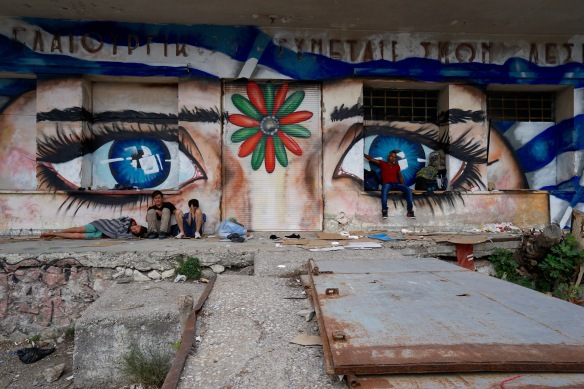
Source: http://laboratorio53.it/guide-invisibili-passeggiate-sonore-nuovi-cittadini/ 
Changing the Narrative
Philip Chukwueke, MBA student

During the week of our program’s immersion in Rome, I was afforded the opportunity to hear from different organizations that work to assist refugees and FDPs, in their plight to seek humanitarian aid as they hope to achieve asylum in Rome. We’ve heard from representatives of different organizations, such as the Jesuit Refugee Service, Guidi Invisibili, Save the Children, and Médecins Sans Frontières (“Doctor’s Without Borders), as they describe their respective organizational efforts to assist FDPs and how they’re efforts have been impacted by the increasing anti-immigration sentiment that has been sweeping through Rome and all over the European Union. However, of all of the organizations, Guidi Invisibili left a lasting impact with me.

This organization within Labortorio 53, whose mission has been to help change the negative narrative that of migrants, refugees, and forcibly displaced persons in Rome. They’ve been doing so by conducting sound walks: audio guides which give listeners a fully immersive experience of individuals who have traveled from their respective homes, all the way to Rome, in the hopes to reclaim their lives and escape the horrific environment that has plagued their home country.

With the audio guides, listeners can follow the steps the storyteller took as they first arrived to Rome, trying to figure out where to go, all while navigating in a dramatically unfamiliar environment filled with people that don’t look like them and speak an unfamiliar language. This immersive experience that Guidi Invisibili provides for participates, is extremely significant when it comes to trying to understand what refugees and forcibly displaced people have to endure in the hopes the achieve the slightest chance of achieving asylum

Furthermore, the audio guides and sound walks provide a way to combat the negative, anti-immigration narrative that has swept through Rome, Italy, and all of Europe. By giving people an opportunity to essentially try and walk in the shoes of refugees and forcibly displaced people, it can help counter the inaccurate portrayal that such people are portrayed in the media.

When I think of such inaccuracies, I’m brought to an article that I stumbled upon: The Manufacture of Hatred by Daniel Howden of News Deeply, where people, in Hungary were interviewed and inaccurately describe migrants as “dirty” and “violent” and that they are “mostly young men who don’t want to work.”

Another article, Immigrant Stereotypes Are Everywhere on by the Atlantic, reports how the media continually plays a role in the negative perception of immigrants. The images seen are then consumed by an audience, and for many, are taken as factual representation that influences their view among people whom are trying to reclaim their own lives in another country. Changing the narrative, with the help of Guidi Invisibli can have an immense effect. Guidi Invisibli could be the first step to resolving the Europe’s two-faced migration reality, and change the current sentiment of people who are looking for more than just a new home.

A Refugee Crisis or a Solidarity Crisis?


Refugee Rescue, a professional humanitarian search and rescue NGO from Northern Ireland has sought to prevent loss of life for migrants fleeing war, violence, persecution and other threats in their home countries. 

A Refugee Crisis or a Solidarity Crisis?

Marissa Walsh, MPA Candidate

USF Arrives Going to Rome for the first time meant seeing an underlying theme captured in the following scenes: sitting next to nuns on the plane, seeing priests laughing while eating spaghetti, finding rosaries next to magnets at souvenir shops, and hearing a call for Sunday Mass at Terminal 3 in the airport. As graduate students from the Jesuit University of San Francisco we had the opportunity to dive deeper into the religious motif that permeates Rome specifically in the context of what these organizations (as well as non-religious organizations) are doing to support to the refugee crisis in the European Union.

Context & Service Delivery Seeing images again and again of a plethora of faces popping out of orange life-jackets in small boats against a huge blue sea gives a strong impression of helplessness and bravery for those risking their lives in making this journey. The UN estimated that in 2016 the total number of migrants that died attempting the journey across the Mediterranean exceeded 5,000 people. As a School of Management student, learning more about program management and refugee service delivery from Caritas Roma and Médecins sans Frontieres brought home how these organizations move from a desire to help to actual mobilized and monitored action. As the Jesuit organizations we met with reminded us, Jesuit values focus on both "Doing and Thinking" (not only thinking and not only doing, as Chiara from JRS stated). For example, Caritas Rome sees approximately 70 migrants per day, assisting in connecting individuals and family health, legal, professional, social and educational services.

Host Countries The organizations we met with in Rome said that migrant numbers have decreased annually since 2015 and that they are no longer in crisis mode, yet a ‘solidarity crisis’ still exists across Europe. Evidence of the solidarity crisis can be seen in the lack of host countries from wealthy G20 nations willing to welcome refugees. Recently, leaders in the T20 Task Force on Forced Migration are working toward providing financial support to low and middle-income countries who are supporting the bulk of the world’s refugees.


Top host countries per the UNHCR 2017 Global Trends Report on Forced Displacement
A Call to Action I left Rome inspired by the individuals and organizations that have mobilized toward helping some of the most vulnerable populations that exist today. It made me ask myself and want to ask others, how can we all start contributing toward 'outsiders' and other vulnerable populations in our communities today? I say let's take a page from the Jesuits and "Think and Act." This can mean getting involved with a local organization who supports refugees, migrants or other vulnerable populations, donating money for those who have less time, or voting for candidates who support these initiatives. It can also mean speaking in support of these groups as you encounter them in your everyday life or helping anyone with this experience integrate into your work or school environment.
When in doubt, we should all strive to operate under the Jesuit principle of thoughtful action.

A Familiar Stranger


A Familiar Stranger
Madhuri Mannava, MBA student

Have you ever taken a walk through the eyes of a stranger? Close your eyes and think about how you would take someone through your life. What would you start with, your childhood, a certain day in your life, or just your daily routine?

Every two seconds, approximately 1 person is forcibly displaced in the world.[1] Worldwide, there are now 68.5 million forcibly displaced humans and this number is growing every day. Every two seconds. 

Globally, humans are in need of refuge, they need homes, they need support. However, in the United States, we constantly hear rhetoric that dehumanizes refugees and the administration is refusing to give support. Refusing to give support to mothers, children, fathers, brothers, sisters, grandparents. 

During the University of San Francisco’s Academic Global Immersion in Rome, we had the privilege of meeting three refugees, through Centro Astalli and Guide Invisibli, all with captivating and powerful stories. So many times in our lives, especially in the bustling tech world that is San Francisco, we are immersed in the world of data and numbers and we tend to forget the stories of each individual. While data is important to understand the scope of the issue, it can take away from these powerful stories that each person has. 

Each of these stories is so important to hear because it gives us a chance to see through the eyes of a refugee, of a fellow human. Something we heard during the AGI trip was that the “refugee crisis is not a humanitarian issue, it’s a solidarity issue.” This is such an important statement. We have the power to stand with our fellow humans and support them, advocate for them, and push for policies that do the same. 

When you see articles and news clips showing the President of the United States saying that he will “look Syrian children in the face and say they can’t come,” it is hard to remain optimistic that change is afoot.[2] But change starts here, so continue to share the stories of refugees, vote for more inclusive policies, and take the time and speak to a refugee and hear their story. When you do this, you may learn that they may be a stranger, but they’re more like you than you know. In the end, speaking to one another is what takes us from being strangers to being familiar strangers.

Resources to know more: For more information on what you can do in the Bay Area, visit the following links: 
  • Refugee Transitions: https://www.reftrans.org/
  • Creating education, family engagement, and community leadership opportunities for the San Francisco Bay Area's refugee, immigrant, and asylee newcomer communities since 1982.
  • Organization for Refuge, Asylum, and Migration (ORAM): http://oramrefugee.org/
  • ORAM specializes in the protection of exceptionally vulnerable refugees, including LGBTI refugees.
  • Center for Empowering Refugees and Immigrants (CERI): https://www.cerieastbay.org/
  • Center for Empowering Refugees and Immigrants (CERI) is a nonprofit organization based in Oakland with a mission to improve the social, emotional, psychological, economic, and physical health of refugees and immigrant from Southeast Asia affected by war, torture, genocide or other forms of extreme trauma.


References:
#RefugeesWelcome #AGIRome #Solidarity

The Impact of an Academic Immersion

USF AGI 2019 Cohort receiving instructions from Dr. Marco Tavanti in Rome, Italy 

An American’s Awakening: The Impact of Immersion

Zaid Adrian Hakim, MPA Candidate

As of late, the current state of global affairs, including our collective foreseeable future, can be succinctly characterized by most as unpredictable and disturbing. When we ask ourselves the age-old question of “What kind of world will we be passing to our children?” those that embrace a global perspective may be fearful that the problems that jeopardize our humanity are potentially insurmountable. As the wealth of the world continues to be increasingly centralized among the financial elite and the negative effects of climate change become more burdensome for communities across the socio-economic spectrum, one reality that is particularly disheartening regarding global stability is the conservative political shift that many countries around the world are experiencing. Conservatism, in nature, is not distinctively opposed to social justice or social evolution, however in its most common application today, conservatism is leading societies to be increasingly nationalistic, economically isolated, traditionally extremist, and inherently opposed to immigration and refugee acceptance. Scarcity of natural resources, lack of financial abundance, and - most of all - oppressive violence all contribute towards the pressures vulnerable populations worldwide are forced to endure.

To me, fellow human beings fleeing their homes and fighting to survive transcends the man-made barriers that are national borders. After all, grounded in a framework that acknowledges human rights and human dignity, man-made systems are directly or indirectly responsible for all the world’s atrocities. The awakening occurs when average people, who have careers, families, and obligations that occupy the greater half of their time and energy, have an opportunity to take a closer look at the world’s deficiencies, and more importantly – the world’s injustices. Without the 2019 Academic Global Immersion (AGI) program through the University of San Francisco, I would still be living in the bubble of American exceptionalism, immune from global problems and focused exclusively on domestic issues and personal interests. When I say “Awakening” I don’t mean a variation of enlightenment – as my definition of enlightenment involves serene peace and internal contentment. When I say “Awakening” I mean to say that my eyes have now been opened to see beyond everything that I’ve ever seen, and my mind and worldview has been broadened beyond everything that I thought I knew. As I’ve now returned home, to my suburban neighborhood and demanding public sector career, through it all – I now feel a strong sense of uneasiness.

I feel inspired, capable, motivated, and I've developed a mindset that is intolerant of human suffering and impatient with injustice. As the next generation of educated and hard-working Americans, it is our duty to each other and to the world to reject racism, embrace human kindness, to demonstrate empathy, and to actively engage with inadequate systems so we can fix them. It’s what we’ve been born to do – To leave the world better than we found it. We need to change the narrative and seek truth through evidence-based frameworks, objective data, and personal storytelling.

We need to lead by example and be the change we want to see.

Photo Source: Noose13.blogspot.com: Toby Hughes. 10/05/15 
USF AGI 2019 Cohort & Save the Children leadership in Rome, Italy 

Drowning or Diaspora?


Source: The New Arab: More than 250 refugees 'rescued in Mediterranean' off the coast of Libya. 
In 2017 alone, over 3,000 migrants have died while making the journey to Europe [Getty]. 
Date of publication: 27 December, 2017

Drowning or Diaspora: Where do we go from here? 
By Linda Ereikat, MIMS student

In the waking hours of September 2nd, 2015, images of three-year-old toddler Aylan Kurdi’s lifeless body on a beach at the Bordum port in Turkey sparked international debate and outrage. The disturbing photograph of the Syrian child was a mere representation of the reality: that refugee lives are simply not valued. Aylan, along with thousands of other migrants, lost their lives during their journey to refuge and safety in the harsh waters of the Mediterranean Sea. According to the IOM, 5,143 migrants crossing the Mediterranean were either dead or missing in 2016 alone (IOM, December 2017). Deconstructing the cause of Aylan and the thousands of other migrants who have lost their lives at sea can be discussed in several different components and compartments of migration studies. Some may choose to discuss the rubber boats and tampered life vests provided by the smugglers, others will blame the parents. However, the utmost important factor in understanding these tragic migrant deaths is simply the notion that people are being forced to choose between the risk of drowning in order to reach the diaspora.

The migrant deaths in the Mediterranean Sea are compartmental to the discussion on immigration and human rights. The migrants who do make it across the sea and survive their traumatic journeys of crossing borders and leaving their lives behind, have to endure a new struggle as they start from scratch to build a new life. To learn an entirely new tongue, struggle through the maze of a nation’s immigration process, and beginning your life in exile are the immigrant realities that we are not discussing enough. The media and global narrative on immigration often focus heavily on the journey, and not the arrival of those who survived the journey. The destination was not the end.

There are several efforts in providing humanitarian assistance to migrants upon arrival. These NGOs play a crucial role in serving the people and assisting with their transitions and integration. Service work is a form of activism because it deals with the people directly affected by the issues and policies that we are fighting against. But an issue in the immigrant narrative has always been the feeling of not belonging and struggling in the diaspora. The struggles of becoming a migrant are endless including the traumatic journey and increase of anti-immigrant sentiment. It creates a view that the choice is either drowning in the sea or existing in the diaspora. This is why the work of service along with empowerment and uplifting our communities is crucial in our plight to achieving real immigrant justice. We must envision a world where the word “immigrant” mirrors the word “dignity”. We must envision a world where migrants don’t have to feel like they are drowning in the sea even if they did not physically drown during the journey. To empower, uplift, and truly act as a community committed to each other is necessary for the longlasting prosperity of immigrants.

Family Separation

https://www.cbsnews.com/news/getty-photographer-describes-photo-crying-child-seperated-from-family-border-2018-06-18/ 

Family Separation 
An Executive Order or Another Source for Human Trafficking?
Hao Nguyen, MBA student

As an accountant having experiences in both for and not-for-profit organizations, I have spent my last ten years after college to focus on the bottom line of the companies where I work. Before attending the AGI-Rome trip, my understanding of refugees, migrants, and the humanitarian crisis was at a bare minimum. Thanks to meeting with the representatives from JRS, Centro Astalli, Caritas Roma, MSF, Invisible Guides, etc. they not only helped me understand the current refugee crisis in Italy but also shared their solutions, which inspired me a lot. In my opinion, the most highlight and touching moment during our organization visits was to hear Susie’s testimony and her journey to Italy without her newborn daughter. Even though Susie set an example as a strong, smart, determined migrant, in her eyes, the emotional trauma of separation from her daughter to come to Italy was not at ease.

In Vietnamese culture, we consider that out of all love and relationship in life, mother and child love has no boundaries and is the most inspiring and inexhaustible. Growing up and respecting the Asian culture until now, I felt removing someone’s child away from his mother is inhuman and callous. Making a connection between Susie and her daughter and thousands of families in the southern border of the US, our lawmakers need to fix the holes in the immigration laws to save children and their families from this over-complicated and dangerous society, where these people at some point will face human trafficking. These children who are as young as five months, as old as 18 years, after being locked up, will be sent to shelters in different parts of the country. I am entirely worried about their safety and that their records are not currently well maintained and revealed for later used in the family reunion.

There are issues that I could see with those children. First, at the young age, they have to face separation from parents, which is undoubtedly a traumatic event in their life and a high chance that it would lead to severe and often permanent emotional and psychological harm, such as: anxiety, depression and developmental delays, etc. Later in life, these children will end up on the street after their childhoods being taken away in shelters. With no doubt, some of these children are trafficking victims, who are subjected to sex trafficking and forced labor.

In the end, traffickers play a significant and profitable role in moving many children not only across the globe but also within the US. However, as a USF student, there are many ways we can help children at the border. One of them could be through a non-profit organization, such as https://slate.com/news-and-politics/2018/06/how-you-can-fight-family-separation-at-the-border.html

Refugees With Disabilities


AGI Rome 2019 poster on display at the Migrants & Refugees Section of the Vatican.
https://migrants-refugees.va/ 

The Unheard Voices: Refugees With Disabilities 
Shana Murray, MNA student

Our AGI Rome program began with speakers from Jesuit Refugee Services. JRS speaker, Cecilia Bock played the voice of a refugee man who shared that without speaking English, he felt as though he had an empty mind and that he only began to feel like a useful person again when he learned English and could speak. We learned throughout our visits that it is critical to hear the stories of the displaced to gain empathy for each other, and not live in fear. I couldn’t help but wonder, how do we hear the stories of those who cannot explain? The stories of those who not only have a language barrier but those who developmentally do not have the communication capacity to tell their experience?

UNHCR International Disability Alliance reported in May 2018 that an estimated 9.3 million persons with disabilities are forcibly displaced as the result of persecution, conflict, violence, and human rights violations. UNHCR International Disability Alliance 2018 These numbers are relevant to demonstrate a need, yet remain stagnant without the compelling and meaningful stories that live beyond it. UNICEF reports that refugees with disabilities are less likely to have had any formal language training in their home countries, with only around 1% of girls with disabilities noted as literate, which compounds the issue. Resource Guide for Serving Refugees with Disabilities My question led me to read on about the stigma of living as a refugee with a disability, the underreported, and the misidentification at registration processes. Reports spoke of the uncollected data and lost profiles of the disabled, and of services that did not recognize the unique needs of the boy that couldn’t sign in his language, let alone ours. Refugees With Disabilities: Disabilities At A Glance But as I read on and learned, I did find hope. The UNHCR report (2018) recognized that an inclusive refugee response must include persons with disabilities and representative organizations. In addition, the U.S. Committee for Refugees and Immigrants (USCRI) resource guide states that the family’s perception and the community perceptions are all important questions that can be evaluated to understand the individual without having to hear from them directly.

It is encouraging to see that there are organizations working to hear the underserved, but the work reaches far beyond the refugee camp. Many people aren’t even aware of the limiting belief systems that keep others feeling like outsiders. Building inclusive communities begins by breaking down our own barriers, by getting to know each other, volunteering, learning each other’s stories. The responsibility lies with each of us to think from an inclusive lens so that our communities are ready to receive people of all abilities. Through our stories, we can see, each of us are simply individuals in need of different supports.

The EU and Ethics of Migration


Source: Author's own photo. Taken January 16th, 2019, in Rome, Italy.


Out of Sight, Out of Mind: 
The E.U.’s unethical approach to migration management 
Karen Larke, MA Migration Studies 2019 

In the spring of 2013 I had the chance to go to Rome during my undergraduate studies. Six years later, I found myself back in Rome participating in an immersion focused on refugee services. In 2013, things were quite different in Italy and the European Union. Migration via the Mediterranean Sea was still a newer phenomenon. The EU and Italy were scrambling to find a solution to an unprecedented flow of migrants toward Europe.

What I thought knew

Six years later, as a current Master in Migration Studies candidate, I thought I was pretty well informed on the refugee situation in Italy. I knew that there were fewer migrants and asylum seekers arriving by boat because of efforts to detain migrants before entering Europe, that the E.U. made such deals to stymie migrant’s mobility. I also knew about the human rights abuses Libya, the right-wing and anti-immigrant political waves of Italy and Europe, and the connection to Brexit. Despite all this, there was much I didn’t know, that which the BBC and the New York Times could not fully explain. This is what I encountered during my second time in Rome.

Whose reality?

The reality in the E.U., and in Italy, had changed a lot in the years since I was last there. The highest number of migrant crossings in the Mediterranean Sea occurred in 2015 (UNHCR). 2015 was also when many humanitarian groups sped into action, creating search and rescue efforts to supplement Frontex and the Italian Navy. The Italian Navy’s rescue mission, “Mare Nostrum”, started in 2013, rescued an estimated 130,000 people, before ending the mission in 2014, according to the Washington Post. Today, while crossings are lower than before, the Mediterranean Sea is still a place of crisis, with migrants and asylum seekers left stranded on rescue boats for days on end. However, most of the crisis has relocated in North Africa.

The reality in Libya is a human rights disaster. Doctors without Borders investigators have found that migrants in detainment have been suffering malnutrition, physical abuse and torture. Critics have suggested that funding of detention centers in Libya has allowed the E.U. to outsource the migration crisis. Early last year, Reuters reported on efforts from the IOM to help migrants detained in Libya “voluntarily return” to their country of origin. This is part of a global trend to “upstream” or outsource migration efforts to supposedly “safe third countries”. However, these efforts lack a critical look at the reasons behind the migration flow towards Europe and even more importantly they lack consideration of migrant and asylum seeker’s basic human rights.

Our reality

When faced with news of watery deaths in the sea or pictures of children suffering abuse while in detention, who do you blame? The factors which have led to these situations are complicated to say the least, involving the U.S., the E.U. as well as the governments from which migrants flee. Who is not to blame are the human beings themselves. They seek a better life, freedom, opportunities for education and safety. The reality for us all is that these basic human rights are being denied. We must find a way to provide a safe and manageable movement for migrants. This an ethical imperative we cannot ignore. This will require taking responsibility, recognizing our fellow human beings, the globalized world and speaking out against abuses of migrants, refugees and humans not matter where in the world they come from.

The Power of Positive


Residents of Kiel, Germany, welcome a bus carrying refugees arriving in the town. Photograph: Carsten Rehder/EPA 

The Power of Positive
David Byrd, MNA Candidate '20

When a group of students participating in the Rome immersion program on refugee management from USF’s School of Management were asked to write a word that describes refugees as portrayed by the media, the results were predictable. “Terrorist”, “Dangerous”, and “Criminals” were some of the words reluctantly offered as examples. These words are heard on a daily basis in the media and the constant drumbeat of fear and misperception has shaped the narrative and the lens through which we discuss our fellow human beings who are forced to leave their homes, families, and friends in order to survive.

A USA Today article from May 2018 describes the changing attitudes in the United States as the Trump administration tells its story about refugees. Storytelling was a constant theme as we travelled to Rome to hear from organizations serving migrants and refugees in the Italian capitol. The organizations, including Medici Senza Frontiere and Save the Children Italy were shocked by reports attacking their own organizations and the political climate that no longer welcomed refugees into their country or allowed for humanitarian aid, including rescuing people drowning in the sea.

How do you combat the negative perceptions and attitudes dominating the news? The Office of the High Commissioner for Human Rights urges organizations and individuals to focus on positive stories and building empathy and the Engagement Lab at Emerson College provides a framework to pursue this strategy.

One cannot engage and learn about refugees and not be touched by the humanity, the desperation and the emotion of their stories. Imagine the fear of being forced to leave everything you know in order to escape and survive? Imagine reaching the borders of a safe country and being told that you are not welcome and must continue to live in danger? Imagine being treated as less than human?

What if instead of negative perceptions the positive stories were the loudest voices dominating the news? What if instead of false narratives, facts and humanity guided the political landscape and refugees and migrants were welcomed with open arms? Organizations will need to be courageous and consistent in advocating for their constituents. Positive storytelling is not only necessary for the strength of an organization and to shape public opinion on the necessity or ludicrousness of a border wall, but it is also essential in saving lives. Policies are shaped by public opinion and the current climate is that of fear and xenophobia. By continuing to make a stand and advocating for those in dire need and highlighting and distributing the positive messages, we can create a climate of inclusion, solidarity, and hope.

Refugee Education in Crisis

The first batch of Congolese refugees in Rwanda that have graduated under Kepler University Program.  Photo Credit: KT Press

Refugee Education in Crisis: There, but for the grace of God, go I
By Jean Pierre Ndagijimana, MEd student

The images of my Fellow Africans in the Mediterranean Sea running away from the continent entered my being as I looked at the posters in the offices we visited in Italy/Rome. As I looked at them, I asked my self what the world and Africa in particular, could do to support the younger generation.

I have had my own personal story in the Great Lakes region of Africa, and I am thankful that the Jesuit Refugee Service (JRS) offered me an education. The opportunity as a refugee to learn is critical. Education is the Light at the End of the Tunnel. *

Prior to my Academic Global Refugee Learning Immersion in Rome, my knowledge of refugees came from actual experiences in life as people ran away from their homes, carrying jerrycans, pans, beds, bags, and anything else they value most for small memory and survival.

Babies on their parents’ backs, the hands of children who can walk are grasped firmly. Big clouds of people moving with so much luggage you cannot see their faces all with the hope that the situation might soon improve and that they will come back to their homes and resume their lives.

These scenarios happened often in my life. The destination was a refugee camp, with nothing other than inflamed legs, hunger, and begging for water to drink. Their wounds both internal and external are ignored - everything they had was lost. The goal is to be able to live and survive the everyday hardships from life in refugee camps.

Their lives depend on the generosity of strangers. In refugee camps, food, shelter, water, plates, pans, forks, clothes, children’s pens, notebooks, and so on, none is under their control. When one cannot make autonomous decisions on the very fundamental needs - life is in transition. The hope is that at some point in their lives, they will see the end of the tunnel, enjoying the fundamental rights of self-reliance, self-determination, and hence, “live again.”

Parents hope their children born in the refugee camps will survive in a situation they do not understand – how and why it all began. However, many organizations have limited their interventions to a handout model limiting the provision of education to primary and secondary school which does not stop the refugees' dependency on donors.

In developing countries and in Africa in particular, which are home to 92% of the world’s refugees, one-half of refugee children are left without the opportunity to attend primary school and the situation is only getting worse.

According to the United Nations Refugee Agency (UNHCR), only 1 percent of refugees have access to Higher Education. The opportunity to get a strong Higher Education is an important opportunity for a refugee who hopes to build a bridge from surviving to thriving.

Children caught up in conflicts will either become peacemakers or peace-breakers. In line with the Global Compact for Refugees, support for refugees to access higher education would enhance refugee self-reliance, ease the pressures on host countries, and expand access to third-country solutions.

*My Story JRS/USA 2016 report page 17

I Was a Stranger and You Welcomed Me

 Photo Credit: www.pbs.org
I Was a Stranger and You Welcomed Me
Carolyn Aflague Arroyo. MIMS student

"For I was hungry and you gave me food, I was thirsty and you gave me drink. I was a stranger and you welcomed me, naked and you clothed me. I was ill and you comforted me, in prison and you came to visit me. I assure you, as often as you did it for the least among you, you did it for me." — Matthew 25:35-40

As a Master in Migration Studies student, I search for answers to understand the root causes of migration, explore the history and places of those that are displaced and marginalized, and examine the reasons for this global crisis. Which crisis would you ask? Some may say it is a refugee crisis. I will take direction from Pope Francis as he has called the current situation “‘a crisis of solidarity’, more than a refugee crisis’”.

When I decided to enroll in USF’s AGI Rome program, I knew it would be a once in a lifetime experience. It would be my first time travelling outside of the U.S. and I wanted to challenge myself to learn in a different environment and under a different program. We would have the opportunity to learn outside of the classroom visiting NGO’s and NPO’s in Rome such as Centro Astalli and Save the Children that work with refugees. I was eager to learn about services that were offered in Rome, and more specifically learn more about the Jesuit Refugee Services and their mission for supporting refugees and migrants.

After experiencing the beauty of Rome’s rich history and culture, I realized how its beauty masks the ugly reality of the negative sentiments towards migrants and refugees. After meeting with organizations, participating in tours that focused on showing a different side of Rome, hearing stories shared by refugees, and seeing the Pope and listening to his message, it was clear that Italy was in crisis. Pope Francis’ commitment to center migration has brought awareness to the difference between a refugee crisis and a crisis of solidarity. The importance of establishing meaningful relationships and solidarity with each other at every level: between neighbors; communities; organizations; and countries is vital to solve this crisis. Why are we creating borders instead of bridges? Our class had the opportunity to meet with Father Fabio Baggio who works specifically with matters regarding migrants and refugees under the Dicastery for Promoting Integral Human Development. He brought light to the question: What would Jesus do? Would Jesus let thousands of people die in the sea? Would he create walls to keep hungry children from being fed or from safety? I am thankful that I was able to experience this program alongside 20 other USF students. By the end of the course, we built community and solidarity with one another. Moving forward as we each walk in different directions, I have confidence that we will keep our hearts open in our work and build the bridges that are needed for solidarity. May we welcome all strangers.

Building a Wall in the Land of the Free


Building a Wall in the Land of the Free: 

A National Emergency or Human Rights Violation?
Aunée Tarango, MPH student

Last week, I had the opportunity to study refugee management and human rights in Rome, Italy with the University of San Francisco’s AGI program. During the trip, our group spoke with multiple organizations working directly with refugees about the central issues that arise when an entity is faced with the duty to accommodate forcibly displaced people. With each conversation, I found myself reflecting upon these themes of solidarity, geopolitics, and basic human rights violations that are occurring back home, in the United States.

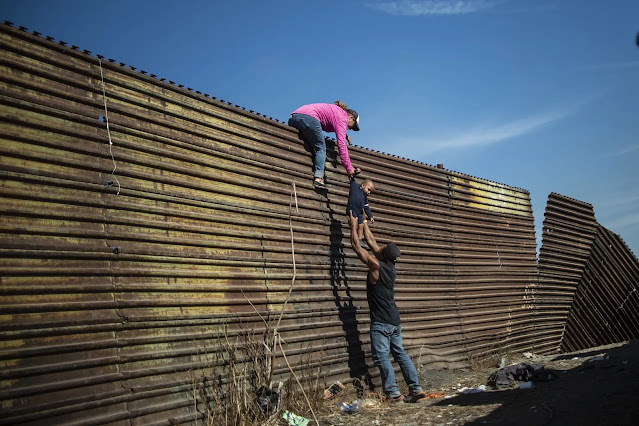
Currently, the U.S. is undergoing the longest government shutdown in its history because Congress refuses to pass a bill that would provide $5 billion to build a border wall with Mexico. The shutdown comes at a time when the border debate in the U.S. is heightened from anti-immigrant rhetoric of the Trump administration.

Guatemala, El Salvador, and Honduras are the main countries from which most of these asylum seekers originate. These countries have been consistently ranked as the most violent in the world in the past years. People, including an increasing number of unaccompanied minors, who are from there are seeking refuge from forced gang recruitment and death threats.

Meanwhile, Trump allows the government shutdown to continue. Armed troops are threatening these asylum seekers at the border, and the country is holding its breath to see if funding for wall will be approved.

Part of what I learned in the AGI course is that, under the 1951 Convention Relating to the Status of Refugees, the international community is under legal obligation to screen each migrant arriving at ports of entry within the country claiming refuge from persecution. The U.S. should not be an exception. The Convention was written for this exact purpose: to provide international protection for asylum seekers whose own governments will not, or cannot, provide that protection in their countries of origin.

As of January 2019, President Trump is threatening to declare a National Emergency as a scapegoat to build the wall along the southern border, without the consent of Congress. However, there is nothing in the National Emergencies Act that gives a president “unreviewable discretion” to decide whether an emergency exists. An emergency exists if it is tangible and not up for debate. President Trump may tweet, televise, and declare a national emergency, but the statute in question determines that he does not have the right to create one.

In summary, I am extremely grateful to have had the opportunity to attend this course, as I believe it proved to me the importance of deconstructing misconceptions and finding the commonality between us all.

Tuesday, January 22, 2019

Debunking the Dangers of a Single Story


AGI-Rome participants in January 2019 during a walking tour with Guide Invisibili, a sound walks project that tours the city of Rome through the perspectives and life stories of migrants who live in the reception centers of this city

Storytelling: Debunking the Dangers of a Single Story
Adam Abate, MPA student

One of the many experiential learning components of AGI Rome was how human dignity and social justice paradigms play a role in the leadership and management of worldwide projects for humanitarian assistance. A common advocacy theme surrounding the public perception of refugees is the danger that results from a single story, a concept that warns if we hear only a single story about another person or country, we risk a critical misunderstanding. Primarily due to media misrepresentation in their host communities, the public perception of refugees seems to be feelings of opposition. It seems as though policies and values hold more weight than facts and evidence when public perceptions are created. I strongly believe storytelling, a strategy that can be used by advocacy organizations, can help host communities develop appropriate attitudes and inter-cultural competencies towards refugees and forced migration.

During our walking tour, we heard the personal stories of Bakari (pictured above in middle) and other refugees upon their arrival in Rome. Feelings of exclusion, xenophobia, and apathy from host communities in Rome were consistent amongst all the stories I heard. Here’s an article that depicts the refugee crisis and describes the public perception that refugee advocacy organizations are fighting against in Rome, I love Rome, but Rome doesn't love us. After the tour, I spoke with Bakari one-on-one about his story and let him know that my family members had similar experiences as migrants to the U.S. from Ethiopia. I wanted him to know that his experiences were synonymous with many migrants, regardless of the host country. He then shared with me his aspirations on coming to the U.S. to pursue his passion for music and acting.

Reflecting on my conversation with Bakari, I realized I have achieved a learning outcome of this course. Our conversation was a representation of Intercultural communication, a demonstration of cultural sensitivity, empathy, and appreciation of cultural differences. I recommend watching The danger of a single story by Chimamanda Ngozi Adichie, who tells her story of how she found her authentic cultural voice and warns that if we hear only a single story about another person or country, we risk a critical misunderstanding.

The same streets we walked on during the tour were the same streets walked by many refugees before us. To ease the refugee integration process, I believe advocacy organizations must focus on storytelling to create empathy and compassion amongst the host community. To conclude, here’s another piece on storytelling and its potential impact on the Refugee Narrative.

Monday, February 5, 2018

The Forgotten Legacy of Roma Caput Mundi

AGI-Rome participants in January 2018 during a special tour of the Colosseum with Dr. Georgea Colella exploring the migration, slavery and prostitution during the Roman Empire. 
The Forgotten Legacy of Roma Caput Mundi

by Rita Ewing, MIMS

The revolving subject of this program related to refugee integration and the concept of accompaniment. Perhaps, because this theme relates closely to my own research as a Migration Studies scholar, it resonated with me throughout my experiences in this program. During the program we were reminded of the rising facts and figures of Forcibly Displaced Persons worldwide. Due to media misrepresentation, economic downturns, and the uprising of nationalist movements, reception towards FDPs has been hostile and hotly contested since Europe’s refugee crisis of 2015. By examining the discourse related to anti-immigration sentiment, arguments are often premised on the loss of national identity related to the influx of the foreign-born populations. Though history may come alive while walking the ancient streets of Rome, these anti-immigration sentiments seem to reflect blindness towards how its own history of migration has shaped Rome today. A city so indicative to history and migration should prove emblematic to refugee resettlement, yet it struggles to do so. In this experiential report I explore the dichotomy between Europe’s anti-refugee sentiments to Rome’s evidentiary example of how migration has historically functioned.

We stood outside of the Colosseum with our guide as she briefed us on how the site functioned as the epicenter of migration, slavery, and prostitution. As the center of the Roman Empire, Rome found itself as a transit point and home to people from all corners of the empire. The effects of these migratory influences cannot only be seen in the architecture and language, but are also visible within the external characteristics of the Roman citizen. As our guide explained, peoples and cultures blended and what resulted is the Rome we recognize today. To better understand the concept of integration, I recommend this piece by Alastair Ager and Alison Strang, Understanding Integration: A Conceptual Framework. Migration is not new, and the fears related to the natural processes of migration are historically unfounded. The concept that integration of new peoples will dismantle the existing national identity does not recognize that neither the nation-state nor its associated identity exists in a vacuum, rather they are part of a constantly evolving process that incorporates spheres of influences over time. To further explore the concept of citizenship and belonging, I highly suggest Nira Yuval-Davis’ work, The 'Multi-Layered Citizen'. As our guide explained, Roman citizenship could be bought, and what it meant to be Roman varied depending on class and gender. How we recognize political incorporation today is not how it once was, nor is it bound to remain the same centuries from now. Lastly, to conceptualize how citizenship functions in this evolving supra-national, globalized world, this think-piece Should Citizenship be for Sale? is enlightening. Evidence of migration lives and breathes in the streets of Rome. Those same streets we walk on today are in the same footsteps of migrants before us. To deny FDPs from seeking refuge is not only denying them of their human rights, but also denying the history that built and will continue to build cities, cultures, ideas, and languages.

Jesuit Universities Respond to the Global Refugee Crisis

Graduates from the Jesuit Worldwide Learning Program. Photo JWL https://www.jwl.org/en/home 
Taking Charge: Jesuit Universities Respond to the Global Refugee Crisis
By John Calandra, MNA


One of the main principles of the University of San Francisco is that "as Global citizens we have a shared Global responsibility (AGI-Rome Syllabus, 2017)." Over the past four years, AGI-Rome has allowed students the opportunity to study the Global Refugee Crisis in Italy and I was fortunate to participate in 2018.

The first time I read the Jesuit objectives of AGI-Rome I asked myself the question, "how are the other Jesuit universities responding to the refugee crisis." Further research on the subject revealed that a new initiative was created in 2006 called The Jesuit Universities Humanitarian Action Network. The organization is a coalition of three highly regarded Jesuit higher education institutions: Georgetown, Fordham, and Fairfield. You can read more on their website: http://www.juhanonline.org.

On the first day of our immersion we listened to Fr. Thomas Smolich SJ, the International Director of Jesuit Refugee Services (JRS) in Italy. Fr. Thomas spoke about an initiative called the "Jesuit Worldwide Learning (JWL)" program that helps refugees, migrants, and the disadvantaged. It was great hearing about the success of this program and how it is helping refugees resettle into the United States and elsewhere. I found an interesting article online about courses similar to the ones Fr. Tom and JRS have set up for refugees which I have included the link to: https://www.insidehighered.com/news/2013/03/27/jesuit-universities-offer-online-courses-refugee-camps.

On November 4th, 2017 in Vatican City, Pope Francis made remarks that "Catholic Universities needed to study the root causes of forced migration, and ways to counter the discrimination and xenophobic reactions it provokes in so many traditionally Christian nations (Gatz, 2017). Regis, a Jesuit university in Denver, is a member of the Jesuit Commons program and is helping find a solution to the issues Pope Francis discussed. These types of programs certainly embody the Jesuit spirit of Service to others. You can read about Regis' program here: http://www.regis.edu/News-Events-Media/Signature-Story-Directory/Education-at-the-Margins.aspx.

According to a study by UNHCR, only 1 in 100 refugees is able to pursue a college degree in contrast with 34% of youth around the world go to college after high school. As we also learned throughout the immersion even if refugees have college degrees in their home countries these degrees/ knowledge may not be transferrable to the American workforce. UNHCR created a program to combat these issues, which you can read more about here: http://www.unhcr.org/57d9d01d0.pdf.

These data points show the importance of creating a coalition of renowned higher education institutions to help educate refugees and migrants settling in the United States and elsewhere around the globe. Programs like Jesuit commons and JUHAN will help increase refugees access to a quality education, which will in turn allow them to move up the social ladder. Access to education allows refugees to give their children the same opportunities to grow and learn.

One of the most important themes discussed throughout the immersion week was the difficulty refugees have when integrating into a new culture. The Jesuit College education programs for refugees solve this issue. Programs like Jesuit Worldwide learning will help make integration easier for refugees in the future.

While we were in Rome we listened to a lecture at an NGO called Caritas Roma. Alicia, the lecturer spoke about their language education program to help refugees become integrated into Italian culture. Their program consisted of beginning, intermediate, pre-literate and advanced language. These types of programs should be combined with the Jesuit university programs to help refugees around the globe integrate effectively into the society of their host country.

What Does it Take to be Human?

Photo Credit: TIZIANA FABI/AFP/Getty Images 
What Does it Take to be Human?

By Michell Figueroa, MIMS


During the second week of January, the University of San Francisco held the Academic Global Immersion program in Rome, Italy. It was very important for me as a student in the Masters of Migration Studies program to participate in this global immersion course. I had spent months prior to AGI-Rome exploring the politics and policies that have impacted the ‘refugee crisis’ and often found myself feeling defeated with the conceptual discussions that went on in class. Throughout the immersion course we met organizers, community leaders, NGO workers, and others working to welcome refugees and other migrants into Italian society. Caritas, Save the Children, Jesuit Refugee Services, Doctors Without Borders, UNHCR, and SPRAR all participated in our educational experience.

Each speaker we met recounted the strengths of their organization, but also the challenges that they face with such a large and vulnerable population of migrants. During our meeting at the Doctors Without Borders facilities in Rome I learned of the large number of informal settlement camps that can be found housing migrants in very unsafe and unsanitary conditions throughout Italy. I also learned that many people living in these settlements are recruited to work as day laborers in Italian farmlands. This information resonated with me since I myself come from a farm working community in California where many immigrants are exploited by agricultural companies. It was surprising to hear that refugees and other migrants in Italy could be experiencing the same thing that migrants from Central America and Mexico experience in the United States. This meeting encouraged me to look at the humanitarian crisis that Italy is experiencing with a wider lense.

My general attitude towards this immersion trip was to listen and to learn from the people that experience this unique and complex humanitarian crisis. Yet, what surprised me the most is that the crisis might not be as unique or complex as we have posed it to be in MIMS discussions. I mean this in the most humble way possible and with the understanding that it is difficult to quickly accommodate a large sum of people seeking humanitarian aid. However, if we see the underlying layers of this crisis we find that the problems that arise with granting protective status, granting citizenship, integrating migrants and so forth are also experienced in other countries. All over the world, migrants are making their way through dangerous land to find safety, stability, and maybe even wealth, but the problem they face is not migration, it is our reception to them as fellow human beings. We continue to equate migrants as less than human and leave the bulk of the work to organizations such as Caritas, Doctors Without Borders, Save the Children, etc and that is where the problem begins. What I learned during my AGI-Rome experience was that we have aligned our conversations of migration to citizenship, ignoring the major factor of our raw humanity. We have ignored our privilege. Who am I to decide who gets a home? Who is Paolo Gentiloni to determine who is worthy enough to be human? Who is Donald Trump to decide who gets to step and stay on native land? Who is human enough to exist with freedom of mobility? These are the questions that are not being answered by our governments, politicians, neighbors, friends and family. These are the questions we must pose to ourselves; not just so that we may ponder, but so that we may act to ensure we never have to watch people lose their humanity such as they are doing now in this refugee crisis.

Silence & Complicity

General Audience with Pope Francis where the Faculty and Students of Jesuit University of San Francisco participated on January 10, 2018. Photo by Geoff Johnson

Silence & Complicity 
by Geoff Johnson, MNA

During the Academic Global Immersion (AGI) trip to Rome, Italy, we had the privilege of attending and audience with Pope Francis in the Paul VI Hall. Our audience with the Pope was very timely in that in took place on Wednesday, exactly halfway through our program. The two days prior, we had the opportunity to meet with the global staff of Jesuit Refugee Services (JRS) and to hear about JRS’ work helping asylum seekers, refugees, migrants and displaced persons throughout the world. Father Thomas Smolich the International Director of JRS spoke about the mission of JRS which is to, “Accompany, serve and advocate for the rights of refugees and other forcibly displaced persons. As a Catholic organization and a work of the Society of Jesus (Jesuits), JRS is inspired by the compassion and love of Jesus for the poor and excluded.” What struck me most about their mission, is their desire to serve where the need is the greatest and misery is the most pronounced. Led by the values of dignity, solidarity, compassion, hope, hospitality, justice, and participation, the organization finds its greatest advocate in Pope Francis, himself a Jesuit.

Prior to the audience with the Pope, we also had the opportunity to tour the Colosseum and learn about its history of slavery, prostitution and other forms of forced labor. Surrounded by the historical splendor of the Colosseum, I began to understand the human misery and suffering that occurred within its walls and how human lives were not valued. During our time the previous afternoon with Father Michael Smith with JRS, we were led in a exercise on the importance of silence in active listening, and striving to connect with those who are in need. It was following these meaningful preparatory sessions, that Pope Francis’ message on Wednesday resonated so purposefully.

Pope Francis began his message by stating, “It is in the very encounter between human misery and divine mercy that the gratitude expressed in the ‘Gloria’ comes alive; ‘a very ancient and venerable hymn in which the Church, gathered together in the Holy Spirit, glorifies and entreats God the Father and the Lamb’ (General Instruction of the Roman Missal, 53).” Highlighting the importance of silence, the Pope continues, “The silence is not confined to the absence of words but rather to preparing oneself to listen to other voices: the one in our heart and, above all, the voice of the Holy Spirit. In the Liturgy, the nature of sacred silence depends on the moment in which it takes place: ‘within the Act of Penitence and again after the invitation to pray, all recollect themselves; but at the conclusion of a reading or the homily, all meditate briefly on what they have heard; then after Communion, they praise and pray to God in their hearts’ (ibid., 45). Thus, before the opening prayer, silence helps us to recollect ourselves and to contemplate why we are there.”

This powerful message was even more appropriate given the purpose of our trip to Rome, and given the setting of the Pope speaking in front of The Resurrection by Pericle Fazzini. This massive sculpture was created to show the anguish of mankind living under threat of nuclear war during the 20th century. For me personally, I felt the connection of the anguish, misery and suffering that is now felt in the 21st century by refugees and migrants. Furthermore, I especially appreciated the theme throughout the week of silence. So often we think about silence in the face of misery as a form of complicity, as a metaphor for ignoring the suffering of others. But through our time with JRS and with the Pope’s address, I was reminded that silence can actually be a tool of reflection and solidarity. Allowing us to not just listen to, but actually hear and understand, both “the voice of the Holy Spirit” and the stories of those in need.

Message of Pope on Silence: https://w2.vatican.va/content/francesco/en/audiences/2018/documents/papa-francesco_20180110_udienza-generale.html

Image of Resurrection- Anguish of mankind leaving under threat of nuclear war/Contrast with loss of connection between mankind. https://en.wikipedia.org/wiki/The_Resurrection_(Fazzini)

Jesuit Refugee Service http://en.jrs.net